

Lived Experience Panel
We established a lived experience panel, comprised of persons across various stages of Alzheimer’s Disease and Alzheimer’s Disease Related Dementias’ progression and care partners of these individuals. Members of the lived experience panel participate in annual conference calls to discuss issues relevant to the development and conduct of research studies for PLWD. Panel members share thoughts, experiences, and perspectives around living with dementia and contribute to conversations related to improving accessibility and relevance of research efforts. Panel members may also participate in intervention-specific feedback on an ad-hoc basis.
ED-LEAD Lived Experience Panel Biographies
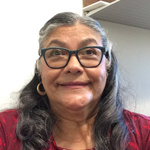
Lupita Gutierrez-Parker
Lupita Gutierrez-Parker has been diagnosed with mild cognitive impairment (MCI). Now retired due to her diagnosis, Lupita served as a regional admissions advisor for Eastern Washington University for 9.5 years, following a 32-year career in social services. LuPita started to notice changes in her memory when she became more forgetful of names, dates, and basic information. Her job required frequent computer work, and she found herself experiencing increasing difficulty navigating new software, recalling standard imputing procedures, and comprehending written materials. “I am having memory problems and I don’t know why,” LuPita told her doctor. “Nothing is making sense to me.” LuPita’s physician performed cognitive testing before referring her to a neurologist. Following a neuropsychological evaluation and brain scans she was diagnosed with MCI. She confesses the immediate aftermath “was a blur.” Lupita believes the work of the Lived Experience Panel is important and providing feedback especially from representatives of diverse communities is much needed. She states, “No one person or family should go through this dreaded disease without information and support.”
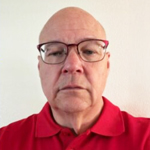
Dale Rivard
Dale Rivard, practicing law and working as a trial attorney was his calling. Rivard’s diagnosis of mild cognitive impairment (MCI) in 2017, however, spelt an end to his job as a prosecutor and assistant state’s attorney in Grand Forks, North Dakota. The diagnosis was heartbreaking for Rivard and his family. About five years on, Rivard, 64, said the underlying cause of his MCI remains unclear, and his condition is progressing. But as he reflects on his experience thus far, Rivard said is grateful for all the support he has received from loved ones and others on the same path. By sharing his story, he hopes that those affect by MCI, and Alzheimer’s and related dementias can see beyond the devastation of a diagnosis. As part of our LiveTalk series, Being Patient speaks with Rivard about his career in law, the early symptoms of MCI that he experienced, and how he has adapted to a fulfilling new chapter of his life.

Anthony (Tony) Wagner
Anthony (Tony) Wagner cared for his wife Marie, who passed away at age 78 after a 10-year struggle with Alzheimer’s Disease. Tony and Marie met in sixth grade and dated since high school. Tony, who is a Vietnam war veteran, was President and CEO of Pillsbury United Communities for 35 years. He and his daughters started seeing signs of changes in Marie’s cognition and memory around 2015. She began repeating stories, asking Tony continuously “What do we do now? What happens next?” He states that it escalated until she couldn’t be apart from him. “We were living a dream life, retired at our lake house in MN but suddenly I couldn’t go anywhere. I couldn’t go get the mail without her following.” Tony states that Marie never seemed to acknowledge the changes in her own behavior, and he could not convince her to see a doctor about it. Finally, in 2019 he called her PCP in advance of her annual physical, asking her to please help. The doctor did a memory test in the office and then referred them to a neuropsychiatrist who performed full cognitive testing and an MRI. The result was a diagnosis of Alzheimer’s in 2020. One week after Marie was diagnosed, Tony suffered a stroke. Six months later he was diagnosed with Polymyalgia Rheumatica (PMR), a condition that involves widespread aching and stiffness. That development caused them to relocate to an assisted living facility in Twin Cities. Tony provided care for Marie on his own until Marie went into memory care. Tony lived in the same facility in an independent studio apartment and visited Marie daily. After her death, Tony moved back to their lake home. “Moving her into memory care was the worst time in my life - and I’m a Vietnam war veteran,” he said. Tony is committed to helping the future of dementia care, caregiving, and research in any way that he can because he was shocked at how complicated and hard the entire process was for him, someone with a social work and management background. Tony is now looking for ways to give back and would like to use his caregiving experience as a positive influence for the future, via the Lived Experience Panel.
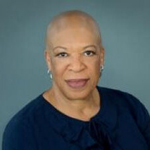
Willetha Barnette
Willetha Barnette, a caregiver for nearly 25 years, is speaking on behalf of her late mother, Ruth, who was diagnosed with vascular dementia. During her caregiving years Willetha worked full-time as the director of donor services at an independent school. For financial reasons, her then aged but relatively healthy and independent mother moved into Willetha's home. Willetha co-founded a caregiver education organization and serves as an instructor for a family caregiver support and education course at a local community college. Several years after the move, Willetha began to recognize warning signs of cognitive decline when her mom needed help with tasks like managing medications. Then Ruth began asking Willetha to accompany her to department stores and grocers, or she would go alone but be gone for long periods returning home “tired and flustered.” Willetha had been accompanying Ruth to medical appointments, but neither she nor her mother were ever given a diagnosis of dementia by the primary care doctor. Willetha just happened to discover this diagnosis during a routine review of Ruth's electronic medical record. Responding to her elevated care needs, Willetha first hired a provider of home care services. When that proved impractical Ruth was moved to a small personal care home. “After finding my mother on the floor after a fall, I knew that her living in our home was no longer a safe arrangement,” Willetha said. This initial fall, several hospitalizations, and congestive heart failure led to the placement of Willetha’s mom in a skilled nursing facility for the last year of her life. Willetha believes she is competent to speak on behalf of her mother’s experience due to their extremely close relationship. Her long period of living with and supporting Ruth has given her intimate knowledge of how her mom made decisions, what she valued, and what mattered to her even in the late stage of her disease. These insights give her a deep understanding of the caregiving role, an understanding she is eager to share with others confronting the challenge.

Freddye G. James
Freddye G. James is speaking on behalf of her mother who passed five days before her 93rd birthday due to complications from vascular dementia on December 26, 2020. Freddye was an analytical chemist, has a Doctorate in Ministry, and describes herself as a lifelong learner and healthcare advocate. Freddye’s mother was always quite active and involved in family and church activities. Her family noticed her mother was beginning to frequently display inappropriate anger in 2011. Shortly thereafter, she began to have memory issues which caused the family to question whether she should continue driving. Freddye took her mother to Emory Neuropsychology for testing on referral from her geriatrician. Doctors informed Freddye that her mother had early vascular dementia and found evidence of five TIAs, none of which had been previously diagnosed. After Freddye’s mother had a serious fall about 4 years later, doctors could see that her disease was rapidly progressing. At the beginning of 1999, Freddye’s mother began to experience frequent falls and require assistance with all activities of daily living (ADL’s). As she cared for her mother at home, researched and wrote her doctoral thesis, and prepared for ministry at her church, Freddye became isolated and unsure what to do as her mother’s caregiving needs increased. She became a part of a 12 step support group at church to aide with her own self-care so she could continue to provide the best care possible for her mother in their home. With the input of her sister and niece, the family eventually decided to bring someone into the home to assist her in caring for her mother a few hours a week. Unfortunately, after a hospitalization in November 2020, Freddye reluctantly placed her mother in an inpatient hospice residence, where she passed away only 2.5 weeks later. Freddye says having lived with her mother most of her life she feels confident she can represent her and her lived experience with dementia for this panel. She and her mother were extremely close and her mother always expressed great trust in her ability to make sound decisions for her and speak on her behalf. Although it was hard work, Freddye says she was honored and privileged to have had the opportunity to care for her mother who so lovingly raised and cared for her.

Ron Hendler
Ron Hendler, a caregiver married to his wife, Mary, for 49 1/2 years. In 2007, Mary was diagnosed with Early Onset Alzheimer’s disease. She was just 61 years old. A few months after Ron was diagnosed with Chronic Lymphocytic Leukemia due to his exposure to Agent Orange while serving in Vietnam. At the time he was very concerned who would care for Mary as she declined if he became ill and needed care himself. Mary’s dementia caused a slow decline in functioning the first few years. She continued to work as a computer programmer and an information technology unit supervisor for the State Of MD government. But, the day came when she could no longer work. Her independence was disappearing. Mary found joy and purpose in an innovative early-onset dementia program called Kindred Spirits in Howard County, Maryland, where she spent a year and a half engaging in activities with others at a similar stage. As her condition worsened, she could no longer participate, and Ron placed her in a full-day care program to help maintain her abilities. Despite the support, her early return home and increasing need for supervision made it clear she couldn’t be left alone. In 2012, Ron made the difficult decision to retire early at 62 to become her full-time caregiver. Ron made the painful decision to place Mary in a dementia care facility in 2015. Though she no longer recognized him in her final years, he remained by her side—feeding her, advocating for her care, and loving her deeply. In late 2019, as her health declined, she entered hospice and passed away peacefully on November 25th, surrounded by family. He said goodbye in the same church where they were married nearly 50 years earlier. With the help of loved ones and support groups, Ron survived this journey. He has since found healing and now offer support to others facing the challenges of dementia.
