

Computational Psychiatry
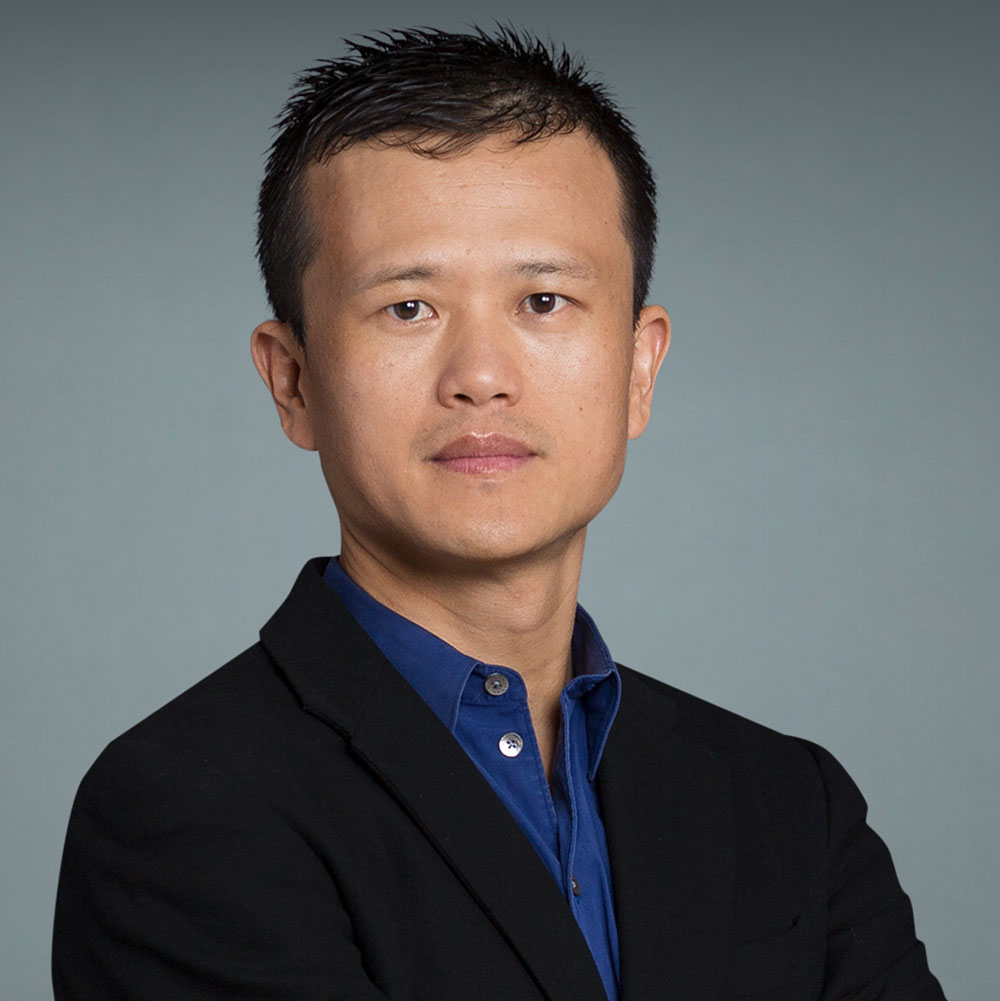
Zhe S. Chen, PhD

Katharina Schultebraucks, PhD
Research scientists in the Computational Psychiatry Program under NYU Langone’s Department of Psychiatry use advanced methods to develop a better understanding of mental health conditions, including depression and post-traumatic stress disorder (PTSD).
Our director, Zhe S. Chen, PhD, and co-director, Katharina Schultebraucks, PhD, lead our interdisciplinary program, which uses innovative computational models and neuroimaging to identify functional connectivity in healthy and diseased brains. We combine mathematical tools with neuroanatomical, neurochemical, neuroimaging, and neurophysiological methods to improve our understanding, prediction, and treatment of psychiatric illnesses. This approach promotes collaboration between clinical scientists and practicing clinicians and advances translational research to develop neurotechnology for computational and digital phenotyping.
We use artificial intelligence (AI) and machine learning (ML) for precision psychiatry and neuromodulation and behavioral intervention for psychiatric and neurologic disorders. Dr. Chen’s lab is also conducting research in NeuroAI, an emerging research area that aims to bridge neuroscience and AI. Examples include using generative AI for neural data augmentation, developing EEG foundation models for closed-loop neuromodulation, and building neuro-inspired AI algorithms.
Dr. Schultebraucks’s lab focuses on harnessing the clinical potential of digital technologies to advance precision psychiatry. By developing easily deployable digital tools for risk stratification, diagnosis, and treatment selection, her work aims to close the translational gap and improve mental health outcomes. Her multidisciplinary research program, which advanced computational approaches, focuses on bringing together the expertise of clinical practitioners with recent advances in predictive modeling, multimodal and temporal models, digital phenotyping, and generative AI models, such as large language models.
Program staff work closely with PhD and MD/PhD students to provide a robust learning experience. Residents and postdoctoral fellows have the opportunity to conduct research with our faculty.
Research Faculty
Our computational psychiatry faculty are experts in PTSD, addiction, anxiety, attention deficit hyperactivity disorder (ADHD), bipolar disorder, chronic pain, depression, epilepsy, and stress.
- Betty Bigio, PhD
- Zhe S. Chen, PhD
- Paul W. Glimcher, PhD
- Donald C. Goff, MD
- Dan Iosifescu, MD
- Matteo Malgaroli, PhD
- Samuel Neymotin, PhD
- Ricardo M. Osorio Suarez, MD
- Candace M. Raio, PhD
- Jaime Ramos-Cejudo, PhD
- Stephen Ross, MD
- Katharina Schultebraucks, PhD
- Carole Siegel, PhD
- Naomi M. Simon, MD
Clinical Studies
Clinical studies in NYU Langone’s Psychiatry Department integrate computational psychiatry to improve our understanding of the causes of psychiatric illness, develop more-effective treatments, and advance precision medicine so that individual patients are matched to the optimal treatment for their unique condition.
The following research study, funded by the National Heart, Lung, and Blood Institute, is currently enrolling participants.
Early Signs: Digital Phenotyping to Identify Digital Biomarkers for Predicting Burnout and Cognitive Functioning in ED Clinicians (R01HL156134; PI: Katharina Schultebraucks)
The purpose of this study is to test the feasibility of collecting and analyzing video-recorded interviews with emergency department (ED) and trauma unit staff to learn about their experiences at work and to identify digital biomarkers of burnout using machine learning methods.
This study will last up to three years and will involve seven visits (four in-person and three virtual). While participating in this study, you will be asked to participate in audio- or video-recorded interviews, fill out questionnaires, take a neurocognitive test, and schedule follow-up appointments. During the in-person meetings, a phlebotomy- certified research coordinator will measure your height, weight, and blood pressure, and collect a hair and blood sample.
Enrollment for this study is ongoing. Full-time ED or trauma unit clinicians and staff are eligible to participate.
For more information about this study, please contact us at 646-754-4943 or EarlySigns@NYULangone.org.
The following research study, funded by the National Institute of Mental Health, is currently enrolling participants.
PREDICT: Point-of-Care Prognostic Modeling of PTSD Risk After Traumatic Event Exposure Using Digital Biomarkers and Clinical Data from Electronic Health Records in the Emergency Department Setting (R01MH129856; PI: Katharina Schultebraucks)
The purpose of this research study is to identify signs of PTSD symptoms from video and audio data. We believe this will provide a more accurate PTSD risk prediction and will help clinicians identify patients at risk of developing PTSD in the future. This study will be able to help doctors implement the right treatment while patients are still in the emergency department (ED). Earlier identification of PTSD risk will not only reduce the likelihood of developing PTSD but also reduce the burden for patients in the ED as well as reduce downstream health care costs.
We will use video and audio data to identify signs that provide information about PTSD risk, including tone of voice, head movement, eye movement, and facial expressivity. Furthermore, we will use information collected from participants’ medical records such as vitals (i.e., heart rate or blood pressure) at the time of admission to the ED.
We are currently enrolling patients for this study. You must be a NYC Health + Hospitals/Bellevue or NYU Langone Hospital—Brooklyn ED patient.
For more information about this study, please contact us at 646-754-4943 or PREDICT@NYULangone.org.
The following research study, funded by the Swiss National Science Foundation, is currently enrolling participants.
MULTICAST: Multidisciplinary Approach to Prediction and Treatment of Suicidality (205913)
The main goal of this study is to improve our understanding of who might face mental health problems or need further psychiatric help after leaving a psychiatric hospital.
The overall goal of this study, which lasts three months, is to improve the ability to predict mental health after a patient’s discharge from a psychiatric unit. The motivation is to improve the prediction of who is at risk for psychiatric disorders, suicidal ideation, or hospital readmission after discharge from an inpatient hospitalization.
We use artificial intelligence to identify signs of psychiatric symptoms from video and audio data. Physical signs such as tone of voice, head movements, eye movements, and facial expressions provide information about mental health. In addition, we plan to combine the information extracted from the video and audio data with clinical and behavioral data collected during the baseline assessment and with the CORA app to further improve the accuracy of the prediction. We believe our model will enable more accurate risk prediction and help clinicians identify at-risk patients so they can initiate the right treatment when patients need it most, reducing patient burden and downstream healthcare costs.
To be eligible, patients must have been voluntarily self-admitted to the psychiatric unit at Tisch Hospital or NYU Langone—Brooklyn.
For more information about this study, please contact us at 646-754-4943 or MULTICAST@NYULangone.org.
Grants
Our research is supported by the National Institute of Mental Health and the National Institute of Drug Abuse.
National Institute of Mental Health
The Cognitive Thalamus: Data and Analytic Core (P50 MH132642; PI: Zhe S. Chen)
CRCNS: Dissection and Control of Cognitive Thalamocortical Dynamics (R01 MH138352; PI: Zhe S. Chen)
National Institute of Drug Abuse
Dissection of Spatiotemporal Activity from Large-Scale, Multi-Modal, Multi-Resolution Hippocampal–Neocortical Recordings (RF1-DA056394; PI: Zhe S. Chen)
Contact Us
For more information about our research, please contact Dr. Chen at Zhe.Chen@NYULangone.org, or you can reach Dr. Schultebraucks by contacting Kacey Ferguson, senior research coordinator, at Kacey.Ferguson@NYULangone.org.
Publications
Deciphering Neural Codes of Memory during Sleep
Trends in neurosciences. 2017 05 ; 40:260-275
A deep learning approach for real-time detection of sleep spindles
Journal of neural engineering. 2019 Feb 21; 16:036004
Interictal EEG and ECG for SUDEP Risk Assessment: A Retrospective Multicenter Cohort Study
Frontiers in neurology. 2022 ; 13:858333
A prototype closed-loop brain-machine interface for the study and treatment of pain
Nature biomedical engineering. 2021 Jun 21;
Data Science in the Research Domain Criteria Era: Relevance of Machine Learning to the Study of Stress Pathology, Recovery, and Resilience
Chronic stress. 2018 Jan-Dec; 2:
Uncovering spatial representations from spatiotemporal patterns of rodent hippocampal field potentials
Cell reports methods. 2021 Nov 22; 1:
Closed-loop stimulation using a multiregion brain-machine interface has analgesic effects in rodents
Science translational medicine. 2022 Jun 29; 14:eabm5868